
A factory reset in Windows 11 restores the computer to its original factory settings, removing all data, apps, accounts, preferences, and personal files. This option can be used to resolve issues such as system crashes, performance problems, or sluggish behavior.
A factory reset is also required in Windows Autopilot scenarios when re‑provisioning a device for a new user or migrating the device between Microsoft Entra ID (Azure AD) tenants. Performing a reset ensures that all settings, configurations, and data associated with the previous user or tenant are completely removed, allowing the device to be enrolled cleanly.
Follow the steps below to factory reset Windows 11. This process will restore the device to its original state, removing all data, apps, accounts, and personal preferences.
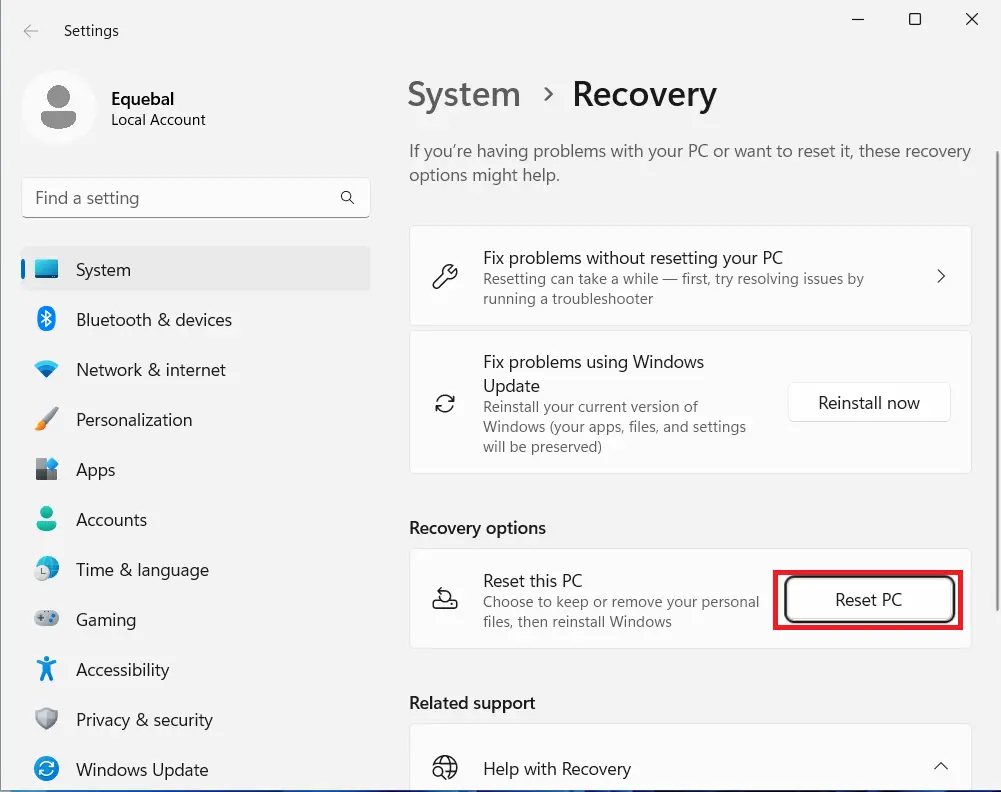
Open the Settings app in Windows 11 and navigate to System → Recovery. Under Recovery options, click Reset this PC to begin the factory reset process.
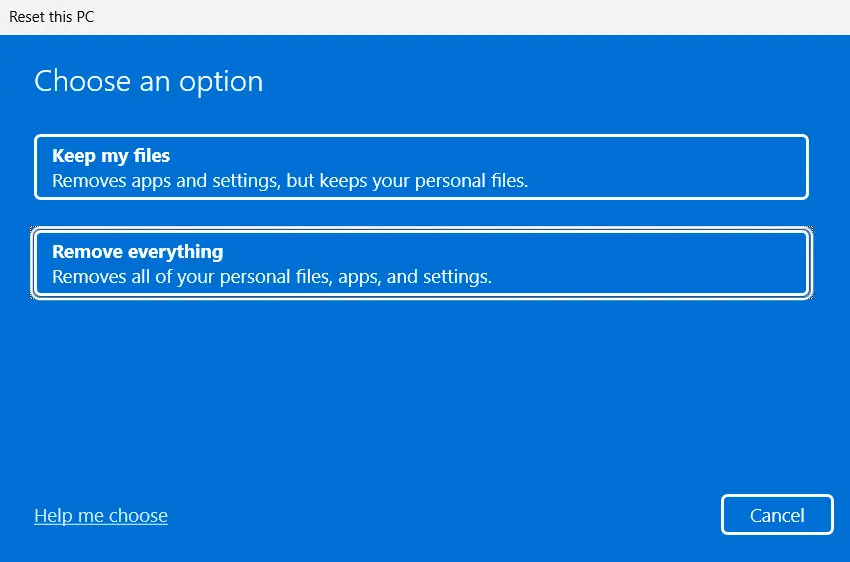
On the Choose an option page, select the appropriate reset option and click Next. If you are resetting the device for Windows Autopilot re‑provisioning or migrating it to a new Microsoft Entra ID (Azure AD) tenant, it is recommended to choose Remove everything. This ensures that all user data, accounts, and settings from the previous configuration are completely erased
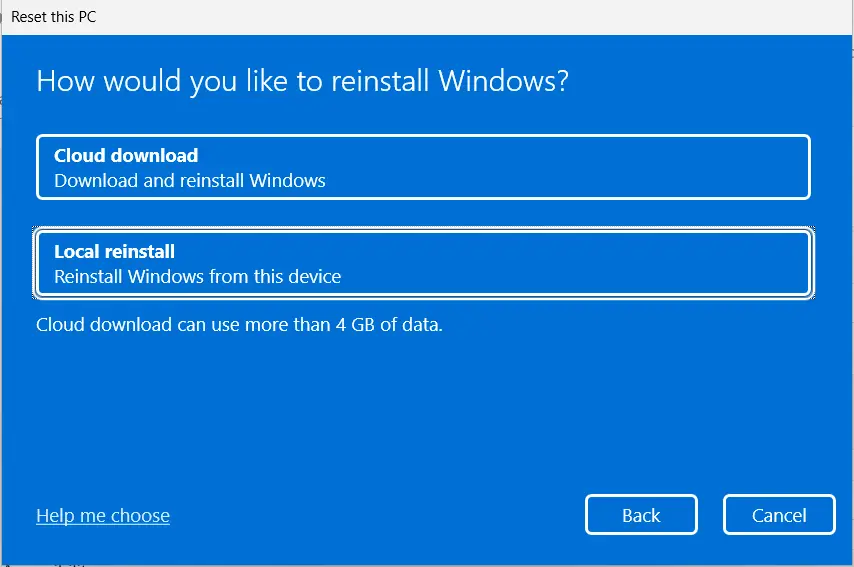
On the How would you like to reinstall Windows? page, select Local reinstall. This option reinstalls Windows 11 using the files already on your device, without downloading from the cloud.
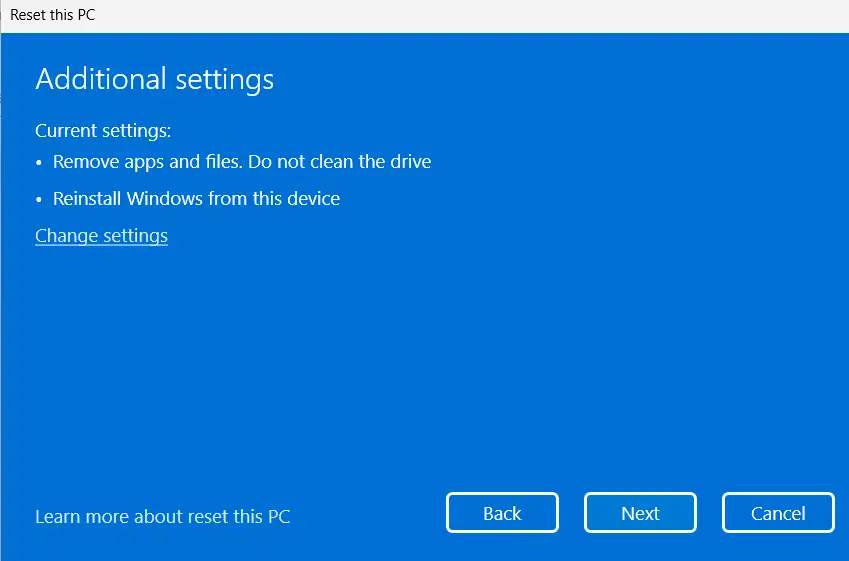
On the Additional settings page, click Next to proceed with the default reset options. If you want to customize the reset behavior—such as whether to clean the drive or restore preinstalled apps—select Change settings before continuing.
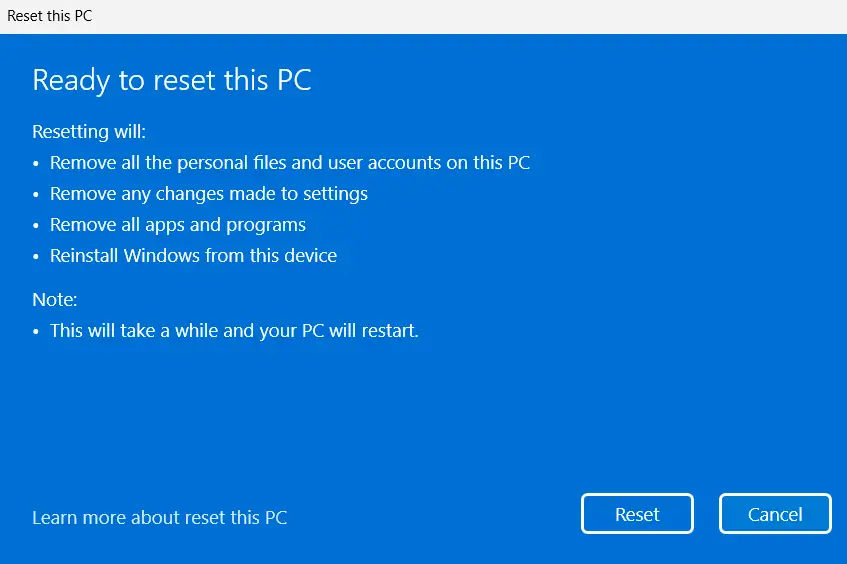
On the Ready to reset this PC page, click Reset to begin the Windows 11 factory reset process. This action will restore the device to its original state, removing all data, apps, accounts, and personal settings.
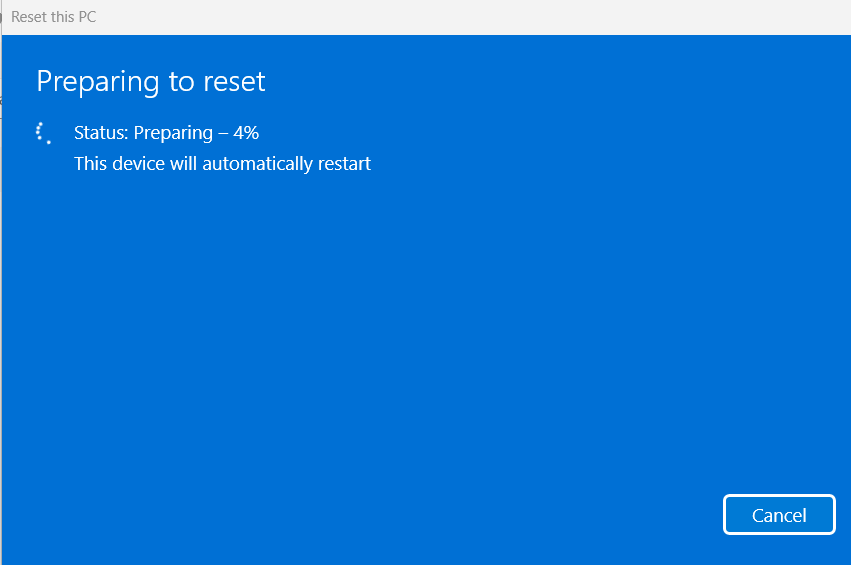
You will now see the Preparing to reset page. From here, you can monitor the reset progress as Windows 11 begins restoring the device to its factory settings.
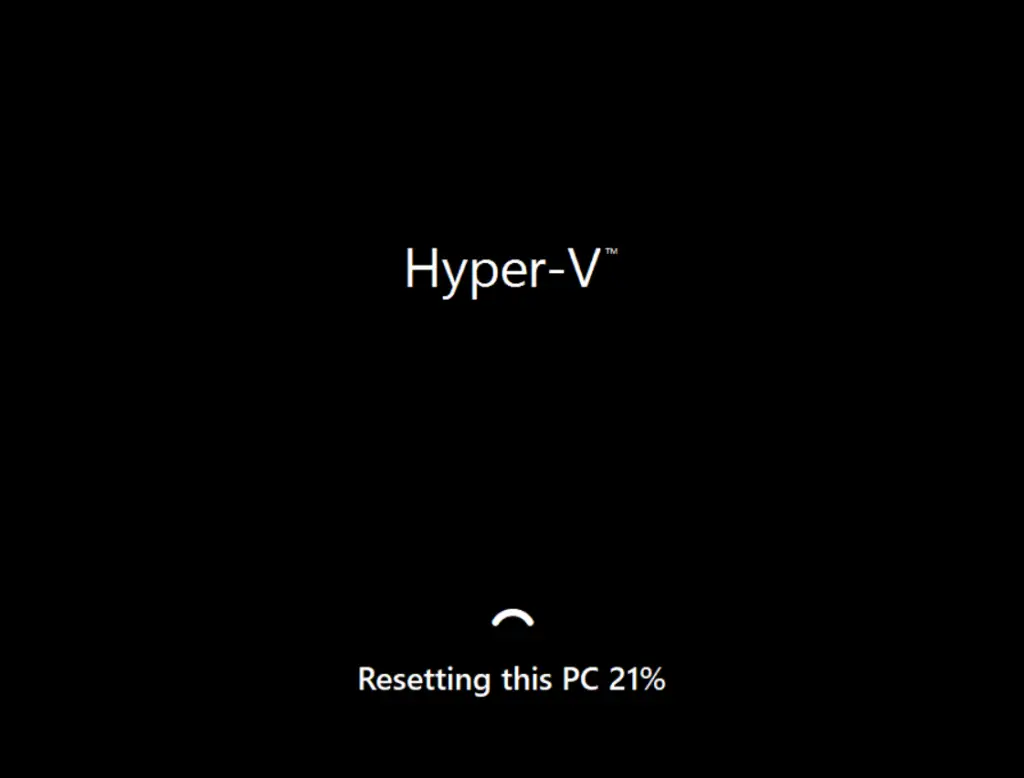
The device will now reboot automatically and continue with the Windows 11 factory reset process. During this stage, the reset sequence removes all data, apps, and settings, preparing the device for a clean setup.
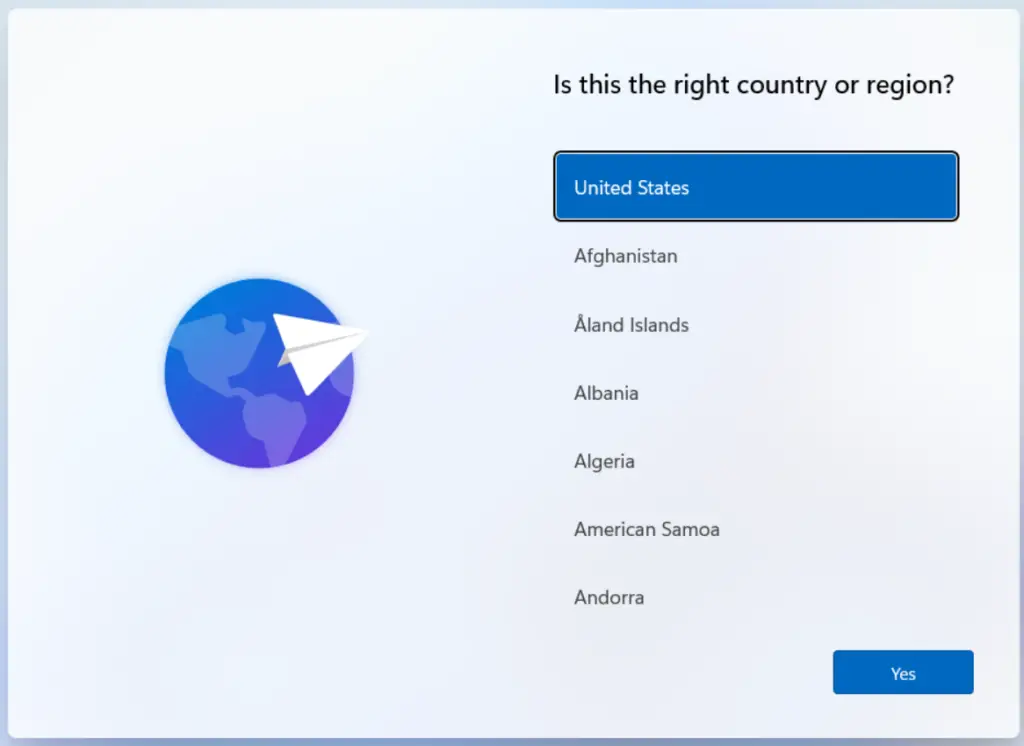
After the reset process is complete, your device will display the Out of Box Experience (OOBE) screen. This guided setup walks you through the initial configuration of Windows 11, prompting you to select language preferences, region settings, network connection, and user account setup. Completing these steps ensures the system is personalized and ready for use.
Conclusion
Resetting your Windows 11 PC to factory settings is a reliable way to resolve system issues, restore performance, and prepare devices for reuse in enterprise environments. Whether you’re troubleshooting crashes, clearing personal data, or re‑provisioning through Windows Autopilot, the factory reset process ensures a clean slate. By following the steps outlined in this guide, you can confidently return your device to its original state and get it ready for a fresh setup or deployment.
Related Posts
- How to Fix Autopilot error 80070002
- Windows Autopilot Device Preparation – Step-by-Step Guide
- Windows 10 Autopilot Deployment Guide | Intune
- Intune – Configure Enrollment Status Page (ESP)
- Intune – Windows 10 MDM- Basic troubleshooting
- Bulk enrollment of Windows 10/ 11 Device to Intune using Provisioning Package
- Enroll Windows 11 Device to Intune through Azure AD Join method
- Windows 11 enrollment with Provisioning package failed with error code 0x800700b7
- How to Obtain Hardware Hash for Manually Registering Devices with Windows Autopilot
- Dynamic Group Based on Enrollment Profile in Intune.
