
Managing browser favorites may seem minor, but for IT administrators, it’s a powerful way to streamline onboarding, enforce compliance, and boost productivity. With Microsoft Intune, you can centrally configure and deploy Edge Chromium favorites across all managed devices—ensuring employees always have quick access to the sites that matter most. In this guide, we’ll walk through the step-by-step process, share JSON examples, and highlight best practices to make your deployment smooth and effective
Why Manage Favorites?
- Onboarding efficiency: New employees instantly get access to key portals (HR, intranet, Office 365).
- Compliance: Ensure staff always have quick access to mandatory sites.
- Productivity: Reduce time wasted searching for frequently used resources.
- Consistency: Provide a uniform browsing experience across the organization.
Steps to Create a Configuration Profile
Step 1: Create a Configuration Profile
- Sign in to the Intune admin center
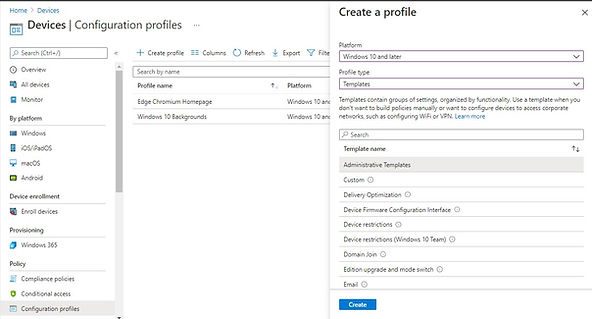
- Navigate to Devices > Configuration profiles > Create profile.
- Choose:
- Platform: Windows 10 and later
- Profile type: Settings catalog
- Template name: Administrative Templates
- Click on Create.
Step 2: Configure the Basic Tab
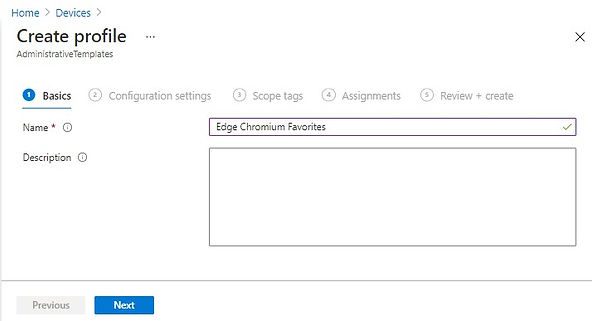
On the Basic tab, enter a clear and descriptive profile name (for example, Edge Favorites Policy – Marketing Team). This name helps admins quickly identify the configuration profile in the Intune console. Once named, click Next to proceed to the Configuration settings tab.
Step 3: Configure Microsoft Edge Favorites
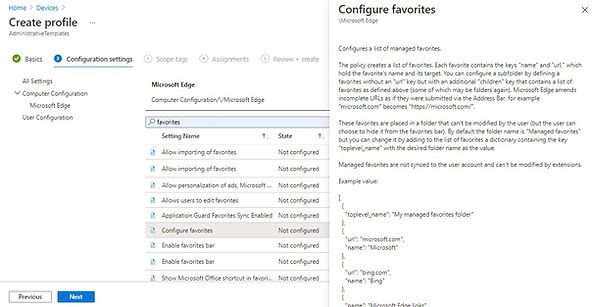
On the Configuration settings tab, navigate to: Computer Configuration → Microsoft Edge.
In the search bar, type Favorites. From the results, select Configure favorites. This setting allows you to define and deploy a curated list of Microsoft Edge favorites directly through Intune, ensuring consistency across managed devices.
Step 4: Configure Favorites with JSON
As shown in the Configure Favorites pane, this setting requires you to organize favorite URLs in JSON format.
- Each favorite entry can include:
- Folder name – to group related favorites
- URL – the web address to be pinned
- Name – the display name for the favorite
- You can also create child folders for nested organization.
- These favorites are managed: end users cannot delete or modify them.
Once your JSON values are prepared, copy and paste them into the Configure favorites text box. This ensures that the favorites are deployed consistently across all targeted devices.
Favorites JSON values:
[
  {
    "toplevel_name": "Techuisitive Favorites"
  },
  {
    "url": "https://www.techuisitive.com/",
    "name": "Techuisitive Website"
  },
  {
    "url": "https://www.techuisitive.com/blog",
    "name": "Techuisitive Blog"
  },
  {
    "name": "Techuisitive Social Media",
    "children": [
      {
        "url": "https://www.facebook.com/Techuisitive/",
        "name": "Facebook Page"
      },
      {
        "url": "https://www.facebook.com/groups/techuisitive",
        "name": "Facebook Group"
      }
    ]
  }
]
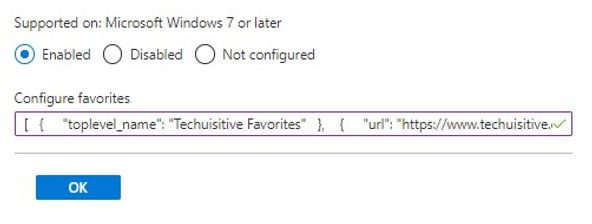
On the Configure favorites pane, click on Enabled and copy the JSON value (created above) into the Configure favorites text box. Click on the Ok button to return to the Configuration settings tab.
Click on Next to move to the Scope tag. If you don’t have any scope tags, then click on Next again to go to the Assignments tab.
Step 5: Assign & Deploy
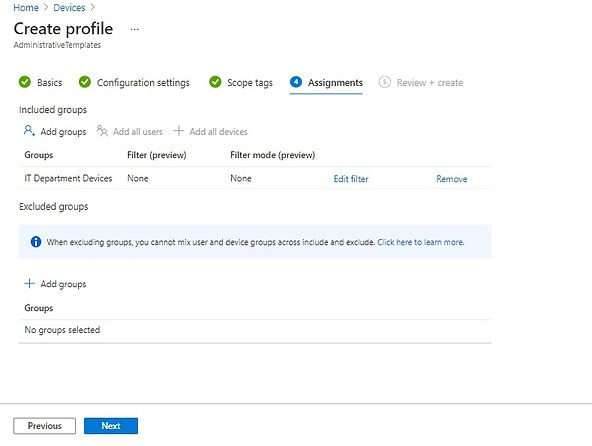
On the Assignments tab, select the Azure AD group that you want to target with this profile. This ensures the configured Microsoft Edge favorites are deployed only to the intended set of users or devices.
After adding the group, click Next to continue to the Review + Create tab.
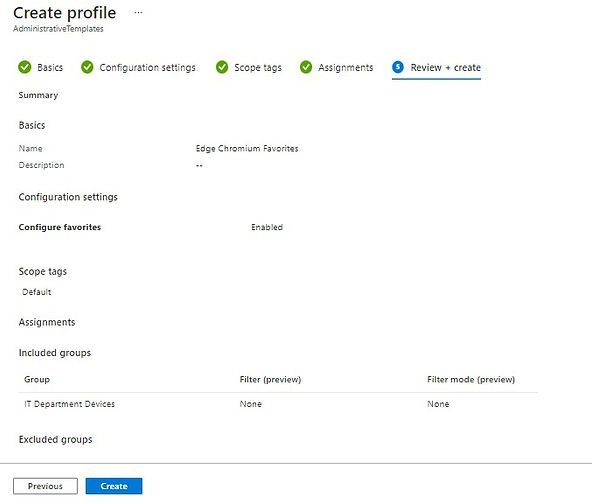
On the Review + Create tab, carefully review all the details of your configuration profile—including the profile name, targeted group assignments, and the JSON values for Microsoft Edge favorites.
If everything looks correct, click Create to finalize the policy. Intune will now deploy the managed favorites to the assigned devices, ensuring a consistent browsing experience across your organization.
Validate Policy Deployment
Once the policy is created, you can validate deployment in two ways:
- From the Intune portal
- Go to Devices → Device configuration.
- Confirm that the profile appears under the assigned group and shows a successful deployment status.
- On the client machine
- Open Microsoft Edge.
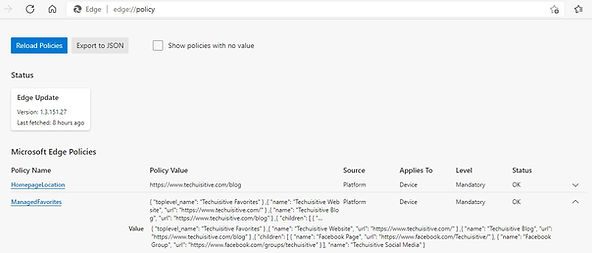
- Type
edge://policyin the address bar. - Under the Managed Favorites policy name, you should see the favorites configured through Intune.
This confirms that the JSON‑based favorites have been successfully applied and are locked as managed favorites, ensuring consistency across all targeted devices.
End‑User View of Managed Favorites
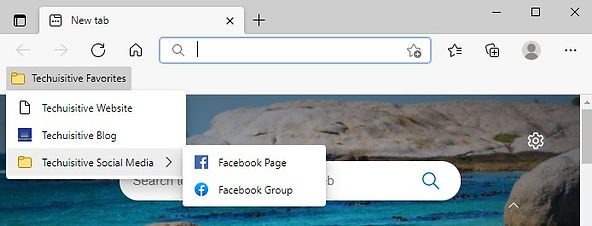
After deployment, end users will see the configured favorites directly in Microsoft Edge. These appear under the Managed Favorites section, organized exactly as defined in the JSON structure.
- Favorites are grouped into folders (e.g., Company Links, Marketing Team, Sales Links).
- Each entry displays with its assigned name and icon.
- Users cannot delete or modify these favorites, ensuring a consistent and controlled browsing experience across all managed devices.
The screenshot below illustrates how the favorites look at the end user’s side, confirming successful policy application.
Troubleshooting Tips
- Malformed JSON: Use a JSON validator to check syntax.
- Policy not applying: Ensure device sync is successful in Intune.
- Conflicts: If users already have personal favorites, managed favorites will appear alongside them but cannot be deleted.
Best Practices
- Keep favorites minimal and relevant.
- Use folders for grouping (e.g., HR, IT, Sales).
- Review and update JSON regularly to reflect organizational changes.
- Test with a pilot group before broad rollout.
Conclusion
Managing Edge favorites with Intune is a simple but powerful way to improve productivity and consistency across your organization. With the right JSON configuration and validation steps, admins can ensure employees always have quick access to the resources they need.
Looking for more? Check out related guides on managing homepage settings and sleeping tabs with Intune.
Frequently Asked Questions (FAQs)
Why should I manage Microsoft Edge favorites with Intune?
Managing favorites centrally improves onboarding efficiency, ensures compliance with mandatory sites, boosts productivity by reducing search time, and provides a consistent browsing experience across all devices.
Can end users modify or delete managed favorites?
No. Favorites deployed via Intune are locked as managed favorites. Users can still add personal favorites, but the Intune‑configured ones remain fixed and cannot be altered or removed.
Related Posts
- Understanding Windows Autopatch with Intune
- Manage Edge Chromium favorites with Endpoint Manager | Intune
- Configure Edge Chromium Homepage & Startup Page
- Configure Microsoft Edge Sleeping Tabs using Intune
- Configure Google Chrome settings using Administrative templates | Intune | Endpoint Manager
- Block USB Device with Exception
- Deny Write Access to USB Devices Using Intune Catalog Settings
- Manage Windows 10 /11 Desktop Wallpaper with Microsoft Intune
- Manage Local Admin Password with Intune & Windows LAPS
- How to Create a Custom RBAC Role in Intune for LAPS Password Administrator
Explore More Intune Guides
Continue building your Microsoft Intune skills with step-by-step tutorials covering device management, application deployment, automation, and troubleshooting.
- Microsoft Intune Learning – Explore comprehensive guides on device enrollment, compliance policies, application deployment, Windows updates, and more.
- Device Configuration Guides – Explore practical Microsoft Intune guides for configuring Windows and other devices, including device restrictions, browser settings, user experience, security, and system configuration.
